

Golden September: €65,000 to advance research into paediatric cancers 🎗️
22 September 2026
Master 2 Internship Opportunities 2027: A Nice-Marseille Collaboration
14 October 2026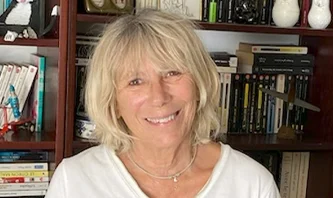

In her latest publication, “Optimizing nanobody-based molecules targeting mesothelin: Exploring format, valency, size, and half-life for next-generation cancer theranostics,” Brigitte Kerfelec and the team explore the potential of single-domain antibodies (sdAbs) to target and visualise tumours expressing mesothelin, a protein overexpressed in several aggressive cancers.
In this interview, Brigitte Kerfelec discusses the study’s main findings and future perspectives, while also reflecting on her career as a researcher and sharing her views on research as she approaches retirement!
To begin with, could you summarise this study in a few sentences for a non-specialist audience?
Brigitte Kerfelec: “In previous work, we had generated a single-domain antibody (sdAb) targeting mesothelin and investigated its potential for use as an imaging agent to identify mesothelin-expressing tumours. In this new study, we used this anti-mesothelin sdAb as a building block to generate several constructs by varying their shape, size, the number of binding sites on the target (valence) and their half-life in the blood. The aim was to investigate the impact of these parameters on their ability to bind to mesothelin, to penetrate 3D tumour models in vitro, and to detect and penetrate tumours in mice. The idea was to develop an effective imaging agent for rapid and reliable imaging of mesothelin-positive tumours as part of a theranostic approach combining diagnostic and therapeutic targeting, in order to optimise patient selection and treatment efficacy.”
The term ‘theranostics’ appears in the title of the article: what does it actually mean?
BK: “The term ‘theranostics’, a portmanteau combining the words ‘therapeutic’ and ‘diagnostic’, first emerged in nuclear medicine. It defines an approach that aims to ‘see what we are treating and treat what we see’, and which involves using the same agent or a pair of related agents to perform diagnostic imaging (PET scan) and targeted treatment (vectorised internal radiotherapy). The aim, which forms part of personalised medicine, is to identify patients likely to respond to targeted treatment through diagnostic testing, to treat them, and to monitor the effectiveness of the treatment and the progression of the disease.”
What is the main breakthrough of this research, and what prospects does it open up for the diagnosis and treatment of cancers?
BK: “This study, which focused on the imaging aspect of the theranostic strategy, confirmed the potential of sdAb-derived molecules as promising imaging agents for targeting tumours expressing mesothelin and provided a solid foundation for the optimisation of these agents. By evaluating the various parameters in combination rather than separately, we were able to demonstrate the importance of certain parameters such as valence or the half-life extension modulus. Nevertheless, each target is unique (membrane density, internalisation capacity, turnover) and it can be difficult to establish a ‘universal’ optimisation strategy. There is still much work to be done, but the results already obtained confirm the relevance of sdAbs for theranostic approaches.”
Why was mesothelin chosen as a target?
BK: “Mesothelin is overexpressed in many aggressive solid tumours (pancreatic, ovarian, triple-negative breast, etc.) as well as in certain acute myeloid leukaemias in children, whilst its expression in healthy tissues is limited to mesothelial cells (pleura, peritoneum, pericardium).
It is involved in several pro-tumour signalling pathways. Several studies have shown that it plays a role in tumour cell survival, proliferation and invasion, and its presence is thought to contribute to chemoresistance.
It is a membrane-bound protein and is therefore accessible to antibodies and antibody fragments; it is a target that has already been validated by numerous therapeutic approaches.
All these reasons make it a highly attractive target for the development of theranostic approaches (targeted therapy + molecular imaging).”
We’ve been hearing about nanobodies for quite a few years now. What is the current status of their development and clinical use?
BK: “Just to clarify, ‘Nanobody’ is a registered trademark of Ablynx, so it should not be used as a generic term. In articles, you should write NANOBODY® or use other terms such as ‘single-domain antibodies’ or ‘single-domain antibodies’.
Three main barriers have long confined single-domain antibodies (sdAbs) to the academic sphere: (i) ‘exclusive’ intellectual property held by Ablynx, (ii) rapid clearance due to their small size, and (iii) potential immunogenicity. Changes have come about with the expiry of patents and the clinical approval of the first therapeutic molecule based on single-domain antibodies, caplacizumab. Since 2018, their development has accelerated, and they are being used in various therapeutic modalities (CAR-T cells, ADCs, immune cell engagers, etc.), primarily in oncology, although indications are diversifying (infectious diseases – notably COVID-19 – autoimmune diseases and neurodegenerative diseases).
There are currently four sdAb-derived molecules approved for clinical use. Single-domain antibodies are also attracting growing interest for various imaging modalities, notably nuclear imaging (PET-SCAN) and fluorescence imaging to guide surgery. Several molecules are in advanced clinical trials (anti-HER2 sdAbs, anti-PDL1 sdAbs, etc.).”
What were the main technical or conceptual challenges encountered during the project?
BK: “As with any project, we encountered a few technical challenges, such as visualising fluorescent molecules in tumour sections. However, the challenges were primarily conceptual, as we very often had to stay focused: several parameters were likely to affect the targeting efficiency of our constructs: size, geometry, valence, half-life, the targeted epitope, intrinsic affinity… This meant a significant number of molecules had to be generated, particularly as we were responsible for the entire process, from design through to production and purification. The main challenge was making choices and prioritising certain parameters, whilst mastering new techniques in each project. Accepting that we cannot explore everything is always the most difficult aspect of any research project.”
What further steps or studies are still required before we can consider potential application in patients?
BK: “There is still a long way to go!! The results obtained are very encouraging and have laid the foundations. It is a sort of proof of concept, but applying this to patients is a completely different project. Which imaging modality for which therapeutic approach: nuclear imaging for vectorised internal radiotherapy? Fluorescence imaging for fluorescence-guided surgery?”
Are there plans to continue this work within Patrick Chames’s team (Antibody Therapeutics and Immunotargeting)?
BK: “No, not directly as part of the team. However, this research formed the basis for the creation, three years ago now, of a start-up, Radiomune Pharma, whose aim is to develop targeted radiopharmaceutical treatments for cancer using single-domain antibodies. Meanwhile, the ATI team is continuing its work on CAR-T cells and T-cell engagers derived from single-domain antibodies.”
As you approach retirement, how do you view your career as a researcher?
BK: “Scientifically, my career has evolved from fundamental research in protein biochemistry to antibody engineering, immuno-oncology and more translational projects. I chose this path because I wanted to focus on more practical questions with potential applications in healthcare.
When I look back on my career, I realise how fortunate I’ve been to have spent much of it in circumstances that, in hindsight, seem rather privileged. Those starting out today find themselves in a different environment that encourages greater individualism, with more financial and administrative constraints. Yet research takes time, and that is what we need to safeguard for young researchers.”
You’re also involved in the PEP (Parity and Professional Equality) working group. What message would you like to convey to young female researchers starting out on their careers?
BK: “I was one of those researchers who waited until I’d ticked all the boxes before taking the plunge, perhaps a form of self-imposed pressure. Now I know that you’re never completely ready. So to young female researchers just starting out, I’d like to say: trust yourselves; everyone has a legitimate place here; research needs your perspective, your ideas and your way of thinking. The journey won’t always be easy, but it’s worth it. It’s a fascinating profession.
And now, the PEP unit is here to support you, so don’t hesitate to make use of it; getting involved will also help to shape the way we work.”