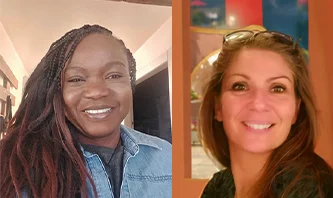


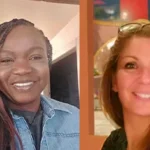
Meeting with Gladys and Julie
30 March 2026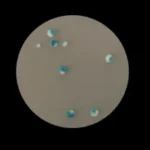
PhD project 2026: how restarted replication in the presence of unrepaired lesions results in genome instability
31 March 2026
The Marseille Cancer Research Center (CRCM) is launching its doctoral recruitment campaign with 31 PhD projects led by its research teams. These projects cover a broad spectrum of cancer research, ranging from fundamental biology to translational approaches.
Immunotherapy, tumor microenvironment, leukemias, solid tumors, epigenetics, and treatment resistance: this diversity reflects the scientific dynamism of CRCM.
How to apply ?
- These projects are offered within the doctoral schools ED658 and ED659.
- Applicants must apply through the competitive selection process of the relevant doctoral schools.
- Prospective candidates are strongly encouraged to contact supervisors prior to applying.
- Application deadline: May 11
PhD projects
1. Exploring molecular tools to enhance CAR-T cell therapies in oncology
Team : Anticorps Thérapeutiques et Immunociblage
Contact : Octavia Antonoff , Rémi Lasserre, Patrick Chames
Summary : Development of tools to better control CAR-T cell activity in order to reduce toxicity while maintaining their antitumor efficacy.
2. Role of Leukemic Stem Cell and bone marrow niche heterogeneity in drug resistance and acute myeloid leukemia outcome
Team : Interactions Leuco/Stromales dans l’hématopoïèse normale et pathologique
Contact : Michel Aurrand-Lions
Summary : Study of the interactions between leukemic cells and the bone marrow microenvironment to understand mechanisms of treatment resistance.
3. Study of alterations of normal residual haematopoiesis and immune cells in early-stage leukaemia.
Team : Interactions Leuco/Stromales dans l’hématopoïèse normale et pathologique
Contact : Cyril Fauriat
Summary : Identification of early hematopoietic alterations and their role in leukemia initiation.
4. Preclinical Development of Chimeric Antigen Receptors (CAR) against the Receptor PTK7
Team : Ciblage des réseaux de signalisation et du microenvironnement dans le cancer
Contact : Jean-Paul Borg
Summary : Development of novel CAR-T approaches to effectively target solid tumors and overcome tumor escape mechanisms.
5. Unearth the roots of hepatocellular carcinoma: from a model system to patients
Team : Ciblage des réseaux de signalisation et du microenvironnement dans le cancer
Contact : Célia Sequera
Summary : Study of the early stages of liver cancer development to identify biomarkers and therapeutic targets.
6. Unravelling the interplay between the myeloid immune infiltrate and the tumor microenvironment in a triple-negative breast cancer mouse model
Team : Ciblage des réseaux de signalisation et du microenvironnement dans le cancer
Contact : Fabienne Lamballe, Paula Michea-Veloso
Summary : Analysis of interactions between tumor cells and immune cells to better understand tumor aggressiveness.
7. COMPLICITY : COMPutationaL tools for NanoBooster In Cancer ImmunoTherapY
Team : COMPO : Pharmacologie COMPutationnelle et Oncologie clinique
Contact : Joseph Ciccolini, Anne Rodallec
Summary : Development of immunomodulatory nanoparticles to enhance the efficacy of immunotherapies.
8. Identifying the most effective time-of-the-day to treat pancreatic adenocarcinoma with existing anti-metabolic drugs
Team : Dialogue cellules stromales/tumorales et reprogrammation métabolique dans les cancers du pancréas
Contact : Fabienne Guillaumond
Summary : Study of the role of circadian rhythms in tumor metabolism to optimize treatment administration.
9. Role of Interferon-γ in Inducing an Epigenetic Cancer Fate During Breast Tumor Initiation
Team : Cellules souches épithéliales et cancer
Contact : Christophe Ginestier
Summary : Analysis of the role of inflammation and epigenetic mechanisms in the initiation of breast cancer.
10. Identification of the proteome associated with the pseudoautosomal region (PAR) of the sex chromosomes during male mouse meiosis
Team : Dynamique du Génome et Recombinaison
Contact : Laurent Acquaviva
Summary : Study of proteins involved in the recombination of sex chromosomes during meiosis.
11. Expression in vivo d’un récepteur antigénique chimérique (CAR) CAR-Nectin-4 dans des cellules cytotoxiques et modulation de CISH point de contrôle immunitaire pour potentialiser la réponse anti-tumorale
Team : Immunité et Cancer
Contact : Geoffrey Guittard
Summary : Development of immune engineering strategies to enhance the antitumor response.
12. Reprogramming tumor stress to overcome immunosuppression and sensitize PDAC to immunotherapy
Team : Immunité et Cancer
Contact : Patricia Santofimia, Alice Carrier
Summary : Study of cellular stress mechanisms and their role in tumor immune evasion.
13. Towards the discovery of new therapeutic targets in T-cell acute lymphoblastic leukemia.
Team : Biologie moléculaire intégrative dans l’hématopoïèse et la leucémie
Contact : Marie Loosveld
Summary : Identification of novel targets for the development of immunotherapies in T-cell acute lymphoblastic leukemia.
14. Epigenetic profiling to understand treatment resistance in AMLs
Team : Biologie moléculaire intégrative dans l’hématopoïèse et la leucémie
Contact : Estelle Duprez
Summary : Study of epigenetic mechanisms involved in treatment resistance.
15. Deciphering clonal heterogeneity in Mixed Phenotype Acute Leukemias
Team : Biologie moléculaire intégrative dans l’hématopoïèse et la leucémie
Contact : Dominique Payet Bornet
Summary : Analysis of the evolutionary trajectories of leukemic cells at the single-cell level.
16. Epigenetic Regulation of Hematopoietic Stem Cell Function in Aging
Team : Biologie moléculaire intégrative dans l’hématopoïèse et la leucémie
Contact : Mathilde Poplineau, Chiara Taroni
Summary : Study of epigenetic changes associated with aging and immunity.
17. Molecular Deciphering and Targeting of the Thrombospondin 1 – CD47 Immune checkpoint
Team : Biologie Structurale et Chimie-Biologie Intégrée
Contact : Xavier Morelli, Sarah Barelier
Summary : Developing new therapeutic strategies aimed at modulating immune interactions.
18. Dissecting and targeting extracellular vesicle-mediated communication in TP53-mutated acute myeloid leukemia
Team : Dommages de l’ADN et pathologies sanguines
Contact : Raphael Leblanc
Summary : Study of the role of extracellular vesicles in leukemia progression and resistance.
19. Deciphering the role of glycosyltransferases in pancreatic adenocarcinoma aggressiveness and chemoresistance.
Team : Recherche Translationnelle et Thérapeutique dans le Cancer du Pancréas
Contact : Eric Mas
Summary : Identifying glycosylated biomarkers associated with tumor aggressiveness.
20. PSMD2 ubiquitination as a theranostic marker and molecular target to predict and prevent resistance in pancreatic adenocarcinoma.
Team : Recherche Translationnelle et Thérapeutique dans le Cancer du Pancréas
Contact : Philippe Soubeyran
Summary : Investigating mechanisms of chemotherapy resistance in pancreatic cancer.
21. Precision medicine strategies to target the Proliferative K2 Subtype in Colorectal Cancer Liver Metastases
Team : Oncologie Prédictive
Contact : David Birnbaum
Summary : Identification of new therapeutic strategies targeting specific tumor subtypes.
22. Dynamic characterization of survival programs in persistent tumor cells exposed to peri-operative chemotherapy in metastatic colorectal cancer.
Team : Oncologie Prédictive
Contact : Emilie Mamessier
Summary : Investigating treatment-resistant cells that drive disease relapse.
23. Predicting the response to neoadjuvant therapies for operable aggressive breast cancers using a simple blood test: a new step toward real-time precision medicine.
Team : Oncologie Prédictive
Contact : Renaud Sabatier, Emilie Denicolai
Summary : Development of blood-based tests to predict treatment response.
24. How restarted replication in the presence of unrepaired lesions results in genome instability
Team : Dommages de l’ADN et instabilité du génome ;
Télomères et Chromatine
Contact : Luisa Laureti, Karel Naiman
Summary : Investigating DNA replication mechanisms and their contribution to genomic instability.
25. Interdependence of SLX4, RTEL1 and XPF in the handling of replication stress
Team : Contrôle des Endonucléases à Spécificité de Structure et Stabilité du Génome
Contact : Stéphanie Gon
Summary : Analysis of replication stress response mechanisms in cancer cells.
26. Structural and functional consequences of the R481Q disease-causing mutation affecting the Fanconi pathway factor SLX4/FANCP
Team : Contrôle des Endonucléases à Spécificité de Structure et Stabilité du Génome
Contact : Agnès Tissier, Pierre-henri Gaillard
Summary : Study of the consequences of a mutation affecting genomic stability.
27. Identification of synergistic combinatorial treatments for pediatric high grade gliomas using biology-guided drug screening
Team : Pharmacologie Moléculaire inversée en oncologie pédiatrique (REMAP-4kids)
Contact : Eddy Pasquier
Summary : Identification of effective therapeutic combinations for pediatric brain tumors.
28. Targeting iron metabolism to overcome chemoresistance in neuroblastoma
Team : Pharmacologie Moléculaire inversée en oncologie pédiatrique (REMAP-4kids)
Contact : Marion Le Grand
Summary : Exploration of the role of iron metabolism in treatment resistance.
29. Role of the Replication Protein A (RPA) in telomere maintenance : from molecular mechanism to telomere diseases.
Team : Télomères et Chromatine
Contact : Stéphane Coulon
Summary : Study of telomere stability mechanisms and associated diseases.
30. Study of the mechanisms of resistance to adc in breast cancer
Team : Vésicules extracellulaires : mécanismes de signalisation et ingénierie thérapeutique
Contact : Rania Ghossoub
Summary : Understanding the mechanisms of resistance to targeted therapies.
31. Role of syntenin extracellular vesicules in cancer stemness
Team : Vésicules extracellulaires : mécanismes de signalisation et ingénierie thérapeutique
Contact : Sylvie Thuault
Summary : Study of the role of extracellular vesicles in tumor plasticity.