

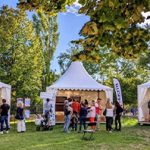
Science Festival 2025
7 October 2025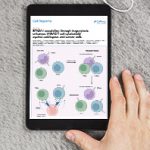
Latest CRCM publications
21 October 2025
CRCM welcomes a new team dedicated to the study of G protein-coupled receptors (GPCRs) and proteomics, two key areas for understanding cancer mechanisms and developing new therapeutic approaches.
Headed by Franck Vandermoere, a passionate CNRS researcher and recognized expert in these fields, the MEMPROT team aims to decipher the complexity of cellular signaling using cutting-edge technologies, including proteomic analysis on the scale of the single cell.
First of all, can you tell us who you are?
Franck Vandermoere: “Born in Lille, I went through Scotland and Montpellier before arriving in Marseille. Married to a Provençal woman, I nevertheless retain a hint of a Ch’ti accent. I appreciate the way of life in the South of France, with its gastronomy, hiking and the sea.
What made you want to join the CRCM?
FV: “I’ve been working in the neurosciences since I was recruited by the CNRS, and for several years now I’ve been wanting to transfer my skills in proteomics and GPCR (G protein-coupled receptors) back into the field of cancer research.
Thanks to its scientific excellence and its location within the Institut Paoli-Calmettes cancer center, the CRCM is well placed to develop this project. I’m already working with several teams there. Marseille Protéomique, whom I’ve known for many years for their expertise, and with whom I share a taste for developing new analysis methodologies in mass spectrometry and proteomics.
Jean-Paul Borg’s team, with whom I am collaborating on the study of a GPCR called CELSR2. Patrick Chames’ team, which has developed a nanobody against the mGlu2 GPCR that has had a major impact on my latest publications (Oosterlaken M et al Nature 2025, Philibert CE et al Sc Advances 2024). The CRCM had published an invitation to tender for the recruitment of a proteomics PI in 2023. So I applied.
Can you sum up your career in three stages or anecdotes?
FV: “A thesis in 2005 at the University of Lille on the search for Akt kinase substrates in breast cancer. During this thesis, I published one of the first characterizations of the interactome of an endogenous protein by AP-MS (affinity purification-mass spectrometry) (Vandermoere et al Oncogene. 2005).
A 4-year post-doc at the Protein Phosphorylation Unit of the MRC at the University of Dundee (UK) on projects making extensive use of high-resolution mass spectrometry to characterize signaling pathways involved in metabolism and cancer. During this postdoc, I worked on a number of mass spectrometers, including one of Europe’s very first LTQ-orbitrap, a technology that revolutionized the world of proteomics by bringing both high resolution and speed of acquisition.
A CNRS researcher since 2009 in Philippe Marin’s “Neuroproteomics and Signaling in Psychiatric and Neurodegenerative Diseases” team at the Institut de Génomique Fonctionnelle (IGF, Montpellier), I have developed research programs on the modulation by phosphorylation and protein-protein interactions of G protein-coupled receptors (GPCRs), in particular the receptors targeted by antipsychotic drugs.
What’s your area of expertise?
FV: “Two areas of expertise…
The oldest: proteomics for 20 years. I was elected President of the French Proteomics Society from 2020 to 2023 and am now an elected member of the board of the European Proteomics Association (EuPA), which brings together 23 national societies in the field.
The most recent: G protein-coupled receptors (GPCRs) for 16 years. I was actively involved in the French GPCR network (GDR CNRS 3545), which has now become the IRN i-GPCRnet with the addition of laboratories from 11 other countries.”
Are you planning any new projects or collaborations?
FV: “The team’s most ambitious development project, which has already attracted the interest of a number of CRCM teams, is the development of single-cell proteomic analysis to account for the protein heterogeneity of solid tumors and obtain data for minority cell sub-populations.
We’ll use microfluidics to isolate cells one by one and prepare their proteins in reactors of a few hundred nanoliters, then analyze them with the latest mass spectrometer acquired by Marseille Protéomique, which is capable of characterizing several thousand proteins per single cell.
Just a few years ago, the best laboratories in the world were only characterizing a few hundred per cell.”
What’s your vision for the team (MEMPROT) you’ll be leading?
FV: “The world of GPCRs is booming thanks to the emergence of breakthrough technologies. Nanobodies that access epitopes inaccessible to conventional antibodies have rapidly become formidable pharmacological tools for targeting GPCRs.
CryoEM is increasingly resolving GPCR structures that were previously inaccessible to other methods. Despite being the target of 35% of current drugs, GPCRs are still poorly targeted in cancer, as many of the deregulated GPCRs are poorly characterized or even orphan.
These new technologies are accelerating the targeting of GPCRs in cancer.”
How do you see yourself contributing to the scientific (and social!) life of the CRCM?
FV: “I’m going to continue to contribute to the life of the learned societies in my fields at European and national level. Having just arrived in Marseille, it’s going to take me a little time to integrate and contribute at local level, but it’s only a matter of time, because it’s in my DNA.
As soon as the other team members have arrived, we’ll be holding an arrival party to introduce ourselves. We hope to see you there!”
Any message you’d like to pass on to your CRCM colleagues?
FV: “My office is always open. Small discussions can lead to long collaborations.
If you don’t know where my office is, look near the mass spectrometers.”
And finally: a hidden talent or a passion outside the lab?
FV: “Former national badminton player, but that’s a long way off.”