

Team Leader
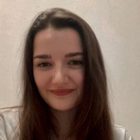
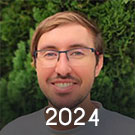
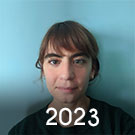
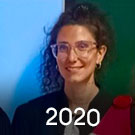
Albane Chiche
Doctoral student
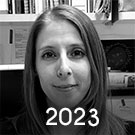
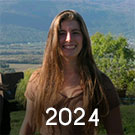
Alix Izac-Imbert
Master 2 student

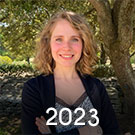
Antonia Boudet
Doctoral student

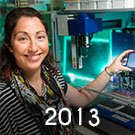
Nadine Carbuccia
Engineer

Sébastien Létard
Technician
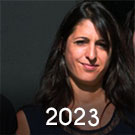
Sophie Lopez
Researcher
Our laboratory studies the role and targeting of oncogenic protein kinases, and identifies new vulnerabilities in hematological diseases.
Hematopoiesis is a model of differentiation that enables us tostudy the molecular mechanisms involved in the transition from a highly regulated system, in terms of bothhomeostasis and differentiation, to a deregulated system leading to proliferative syndromes or leukemias.
In this context, we are particularly interested inidentifying the mechanisms, pathways and protein players initiated by transforming mutations in protein kinases such as KIT and FLT3, and their impact in various pathologies linked to this receptor (hemopathies, mastocytosis, gastrointestinal stromal tumors - GIST, melanomas). We are also studying other original kinases of interest in oncology: CDK6, FES and FER.
Our project is based on three main approaches in which we have recognized expertise:
Functional identification of activating mutations in receptors. This expertise, acquired with KIT in mastocytosis, forms the basis for collaborative projects with clinical research teams. We also search for mutations affecting other therapeutic targets, in particular kinases, in other tumor pathologies.
The search for the involvement of new specific substrates/pathways linked to oncogenic signaling, downstream of activated Receptor Tyrosine Kinases, using proteomics or siRNA approaches. Our expertise in gene transfer in hematopoietic progenitors is a major asset in this functional approach.
Contribution to the identification and characterization of tyrosine kinase inhibitors, in collaboration with AB Science. We are involved in the optimization of kinase-selective compounds of interest in targeted therapy. Our ambition is to identify new therapeutic pathways or targets, by combining our expertise and collaborations.
Our work covers both basic and translational research . To this end, we have access to numerous human and mouse cell models, 3D in vitro cell models, mouse models of hematological diseases, and access to primary patient samples.

The projects

TEAM LEADER
Paulo de Sepulveda
Kinases are promising therapeutic targets in cancer. They are responsible for aberrant, unregulated signaling leading to increased cell proliferation and survival. We postulate that, alongside the classical pathways that are the subject of numerous studies, there are pathologically unknown signaling pathways and therefore therapeutic proteins/targets that are currently ignored.
We use two study models, Mastocytosis and Acute Myeloid Leukemia (AML), which we have been studying for years to identify new players in cell transformation.
We are studying these two pathologies from the angle of dependence on two mutated receptor tyrosine kinases: KIT in mastocytosis and FLT3 in AML. Cells carrying these gain-of-function mutations are strictly dependent on these two oncogenic kinases. We are using these models to identify new kinases that are essential in these models. We have thus characterized several proteins that are the focus of our current studies.
We use a combination of cell models, murine models with patient samples(PDX mice) and primary patient samples, as well as genetic approaches (inactivation, inhibition, mutations) to establish whether our candidate proteins are novel therapeutic targets in these hemopathies.
Technician
Sébastien Letard
Team news


featured publications
01/2024
Desaunay M, Voisset E, Letard S, Roche P, De Sepulveda P.
10/2021
Agopian J, Da Costa Q, Nguyen QV, Scorrano G, Kousteridou P, Yuan M, Chelbi R, Goubard A, Castellano R, Maurizio J, Teodosio C, De Sepulveda P, Asara JM, Orfao A, Hermine O, Dubreuil P, Brenet F.
07/2020
Voisset E, Brenet F, Lopez S, de Sepulveda P.
06/2017
Olvedy M, Tisserand JC, Luciani F, Boeckx B, Wouters J, Lopez S, Rambow F, Aibar S, Thienpont B, Barra J, Köhler C, Radaelli E, Tartare-Deckert S, Aerts S, Dubreuil P, van den Oord JJ, Lambrechts D, De Sepulveda P, Marine JC.
11/2017
Hammam K, Saez-Ayala M, Rebuffet E, Gros L, Lopez S, Hajem B, Humbert M, Baudelet E, Audebert S, Betzi S, Lugari A, Combes S, Letard S, Casteran N, Mansfield C, Moussy A, De Sepulveda P, Morelli X, Dubreuil P.


Labels, Funding and Partners


Like others, they were part of the team. Thank you to all those who have contributed to CRCM's excellence and impact.