

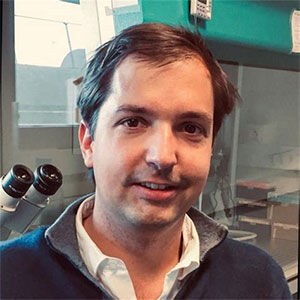

Amira Amri
PhD Student

Asako Isogawa
Engineer

Christophe De la Roche Saint André
Researcher

Coline Hamelin
Engineer

Dmitri Churikov
Engineer

François Laffont
Engineer

Frédéric Jourquin
Engineer

Jérôme Robin
Researcher
Karel Naiman
Researcher

Léa Seban
Doctoral student
Lucie Roger
PhD Student

Manon Pierre
Engineer

Marie-Noëlle Simon
Researcher

Valeria Rubeo
Doctoral student

Yves Corda
Researcher
The Telomere and Chromatin lab aims at dissecting the telomere maintenance mechanisms linked to cancer, aging and telomere biology disorders.
Telomeres are nucleoprotein structures at the end of chromosomes that preserve the stability and function of the genome. Telomere biology is closely linked to cell senescence, aging disease, stem cell biology and cancer development.
The team uses yeast models to study the mechanisms that maintain telomere length, telomere replication and cellular responses to telomere erosion. Our work focuses in particular on the relocation of eroded telomeres to the Nuclear Pore during replicative senescence and the functional consequences of this relocation.
The laboratory is part of a consortium that aims to identify genes responsible for telomere biology disordes, rare genetic diseases caused by premature telomere shortening. We are seeking to understand how these genes are involved in telomere maintenance.
The team is also involved in several anti-cancer programmes. In particular, we are studying the mechanism of alternative telomere lengthening (ALT) in tumours of mesenchymal origin lacking ATRX mutations.

The projects

PROJECT SUPERVISOR
Marie-Noëlle Simon

TEAM LEADER
Stéphane Coulon
Project members :

Karel NaimanResearcher

Yves CordaResearcher

Dmitri ChurikovEngineer

Asako IsogawaEngineer

Manon PierreEngineer

Léa SebanDoctoral student
Lucie RogerPhD Student
Telomeres are nucleo-protein structures that protect the ends of chromosomes from degradation, fusion and illegitimate recombination. They consist of repeated DNA sequences that form a particular chromatin structure through specific DNA-protein interactions. Telomeres are known to be natural regions of the genome that are difficult to replicate, also defined as fragile sites due to the numerous obstacles that prevent the progression of replication forks at terminal sequences. Replicative stress at this level is due to the pausing or blocking of replication forks. This is a potential source of telomere dysfunction, which can lead to genome instability, a characteristic of cancer cells.
Recent discoveries
In recent years, we have shown how components of the yeast shelterin complex (telomeric proteins) recruit accessory factors to promote efficient replication of terminal sequences (Matmati et al., 2018& 2020; Vaurs et al., 2022). Our laboratory has also spearheaded efforts to show how stalled replication forks and eroded telomeres are relocated to the nuclear pore (NPC) to promote either precise replication resumption (Aguilera et al., 2020), or alternative telomere elongation based on recombination in the absence of telomerase (Churikov et al., 2016; Charifi et al., 2021; Aguilera et al., 2022).
The laboratory has also pioneered the description of the role of RPA in telomere replication, maintenance and recombination in yeast models (Maestroni et al. 2020; Corda et al., 2021; Audry et al., 2015).
New approaches/tools
We have established new approaches/tools to explore the mechanisms that protect and restart replication forks at telomeres and to study their spatial and temporal regulation. We set up an artificial replication barrier system in both yeast models to study replication dynamics and the mechanism of fork restart.
Replication barrier analysis
We are analyzing the dynamics of replication at these barriers and identifying the proteome of telomere-arrested forks under different genetic conditions.

TEAM LEADER
Stéphane Coulon
Project members :

Frédéric JourquinEngineer

Valeria RubeoDoctoral student
Asako IsogawaEngineer
Telomere syndromes are rare monogenic diseases characterized by premature telomere shortening. These syndromes give rise to the bone marrow failure syndrome Dyskeratosis Congenita (DC), aplastic anemia and idiopathic pulmonary fibrosis (IPF), which can be caused by telomere shortening and a reduction in the replicative potential of stem cells. In around 40% of cases, these telomere-shortening diseases are not genetically characterized.
Recent discovery
We have recently identified rare heterozygous variations in the RPA genes in patients with short telomeres and idiopathic pulmonary fibrosis (Sharma et al., 2022; Kochman et al., 2024). RPA is a heterotrimeric single-stranded DNA-binding protein that protects the DNA molecule. This complex is essential for DNA replication, recombination and repair, as it coordinates the assembly and disassembly of proteins at the DNA level.
Establishing the causal link
To establish the causal link between mutations in RPA (and also other candidate genes), and telomere instability and disease, we are introducing patient mutations into human cell lines using CrisPr-Cas9 technology and studying their effect on telomere stability. Our aim is to demonstrate the causality of patient mutations on telomere dysfunction, genome instability and TBD.

PROJECT SUPERVISOR
Alexandre de Nonneville
Project members :
Dmitri Churikov
Engineer

Jérome Robin
Researcher

Coline Hamelin
Engineer
Lucie RogerPhD Student
Osteosarcomas are highly aggressive bone tumours that mainly occur in children and adolescents. Genetically, they are characterized by complex structural and numerical aberrations. Osteosarcomas are known to exhibit a high frequency of ALT (Alternative Lengthening of Telomeres) activation.
Mutation and ALT
Previous studies have shown that mutation of the ATRX gene and/or loss of protein expression is only detectable in 30% of them. This discrepancy between a high level of ALT and a low proportion of ATRX inactivation led us to hypothesize that ALT inhibition by ATRX could be reversed under certain conditions.
Mechanism study
We are investigating the mechanisms of ALT osteosarcoma.

Team news

featured publications
09/2024
Kochman R, Ba I, Yates M, Pirabakaran V, Gourmelon F, Churikov D, Laffaille M, Kermasson L, Hamelin C, Marois I, Jourquin F, Braud L, Bechara M, Lainey E, Nunes H, Breton P, Penhouet M, David P, Géli V, Lachaud C, Maréchal A, Revy P, Kannengiesser C, Saintomé C, Coulon S.
06/2023
Vaurs M, Naiman K, Bouabboune C, Rai S, Ptasińska K, Rives M, Matmati S, Carr AM, Géli V, Coulon S.
03/2022
Aguilera P, Dubarry M, Hardy J, Lisby M, Simon MN, Géli V.
08/2022
de Nonneville A, Salas S, Bertucci F, Sobinoff AP, Adélaïde J, Guille A, Finetti P, Noble JR, Churikov D, Chaffanet M, Lavit E, Pickett HA, Bouvier C, Birnbaum D, Reddel RR, Géli V.
11/2022
Vaurs M, Audry J, Runge KW, Géli V, Coulon S.
03/2020
Matmati S, Lambert S, Géli V, Coulon S.
01/2020
Aguilera P, Whalen J, Minguet C, Churikov D, Freudenreich C, Simon MN, Géli V.


Labels, Funding and Partners


Like others, they were part of the team. Thank you to all those who have contributed to CRCM's excellence and impact.


