

ANR Funding for International Project on DNA Lesion Tolerance
21 January 2026
The dark side of AI…
26 January 2026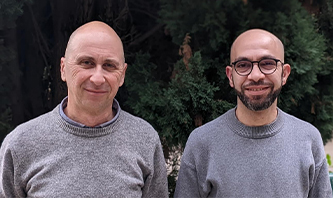
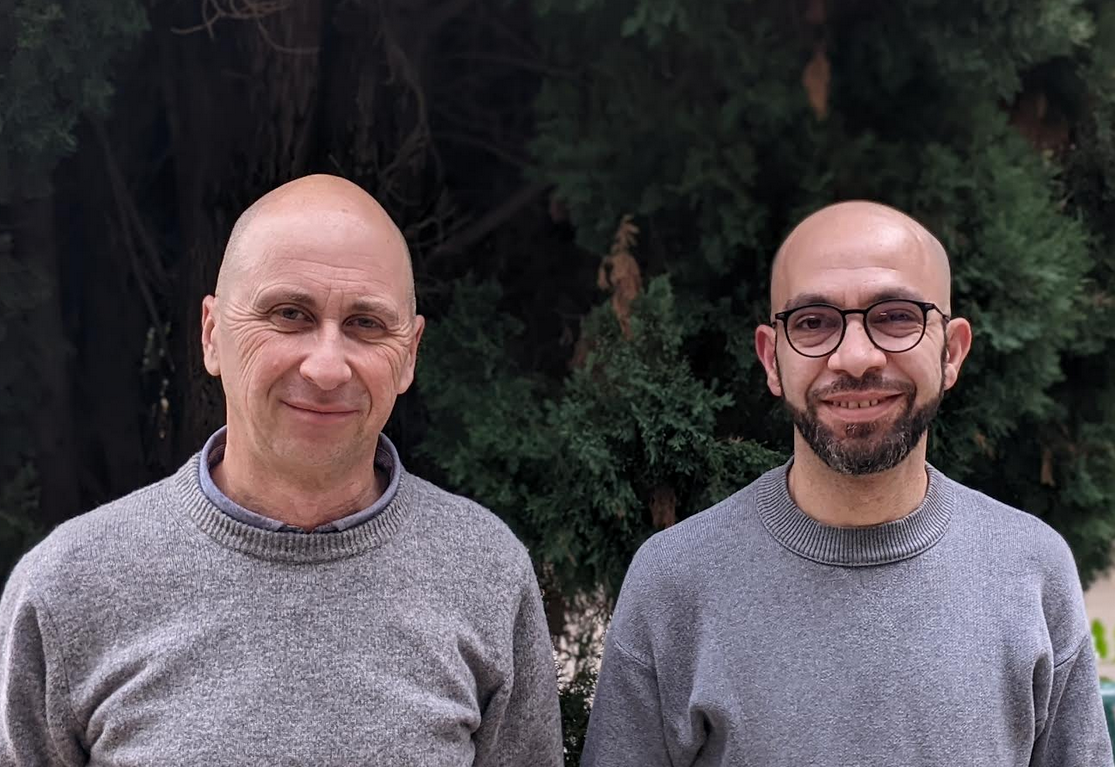
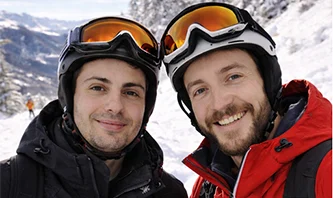
Often discreet but absolutely essential to the smooth running of the Center, the IT department plays a key role in the daily work of the research teams. Behind every operational workstation, we are fortunate to be able to rely on a committed, versatile, and responsive team.
In this interview, Michel Baccini and Gagik Hovhannisyan give us a behind-the-scenes look at the CRCM’s IT department. They discuss their careers, the diversity of their missions, the technological challenges they face, and what motivates them in such a demanding and stimulating research environment.
Can you summarize your career path in a few key stages?
Michel: “Nothing formally destined me for IT: I started with a high school diploma in accounting and management, before developing a passion for IT, a field in which I taught myself. In 1994, I joined the IT department of PMU (the French horse racing betting company) for four years, then Darty for six years, where I acquired solid technical experience. After a six-month stint at Compagnie Fruitière (Port de la Joliette), I left the private sector in 2009 with the intention of continuing in the public sector. Following several attempts, I ended up at the CRCM (Centre de Recherche en Cancérologie de Marseille). After a one-year fixed-term contract, I was hired by Inserm (the French National Institute of Health and Medical Research) in 2010. It was at the CRCM that I received more specific training in Linux and macOS environments.”
Gagik: “My journey began far from France, where, after five years at the National Polytechnic University of Armenia, I earned an engineering degree in the field of transportation in 2006. After two years of mandatory military service, I founded a small IT company in 2008 with two friends, offering local services (photocopying, printing, troubleshooting, etc.). In 2013, I arrived in France, where I started with French language training, followed by IT technician training between 2019 and 2021. Upon completion of this training, an opportunity arose at the CRCM, which I seized. This ultimately led to my being hired by Inserm in 2021.”
What is the scope of the IT department within the CRCM?
M&G: “It is particularly broad. It includes managing the entire IT infrastructure: workstations, servers, printers, access badges, office and scientific software (Adobe, SnapGene, Prism, etc.), as well as preparing quotes, receiving and installing equipment, managing IT waste, lending computers for meetings, providing technical support for seminars, and operating the user helpdesk. We regularly visit the various CRCM sites and also liaise with the IT departments of the different supervisory bodies (Inserm, CNRS, AMU, IPC).”
And what about the less obvious activities?
M&G: “Recently, we handled the quote for a system that unlocks the laboratory animal facility doors in case of fire. This example illustrates just how versatile we are.”
What technological developments are particularly transforming your work?
M&G: “Cybersecurity has become crucial: we must constantly adapt to new threats and strengthen the protection of workstations and servers. As for artificial intelligence, it helps us… for now, mainly as an information search tool: ChatGPT has finally replaced Google.”
What are the most frequent requests from the CRCM teams?
M&G: “Three-quarters of the time, the requests concern incidents: a computer that won’t start, a blocked email account, a hardware failure, etc. The rest relate to installation, software updates, and maintenance.”
Sometimes, these requests are… inappropriate?
M&G: “Sometimes, people contact the IT department very quickly for simple problems they could resolve themselves… like a simple unplugged cable.”
How do you raise user awareness of best digital practices?
M&G: “We have a dedicated section on IT in the welcome booklet for new employees, as well as a booklet specifically devoted to digital usage.”
How do you divide the work within the department?
M&G: “There are only two of us, with complementary skills: Michel focuses more on servers and projects, while Gagik handles support, maintenance, and the helpdesk. We can cover for each other when someone is absent, but only to a certain extent. Having an additional person would allow us to specialize more fully, develop internal communication about IT practices, improve procedures, and strengthen awareness of best practices (especially regarding passwords).”
Your greatest satisfaction… and your biggest challenge?
M&G: “We particularly appreciate the research environment, which is intellectually stimulating. Seminars are often a great learning opportunity… when they are presented in a way that is accessible to a wider audience. The diversity of systems (Windows, macOS, Linux) also makes the job interesting.
The biggest challenge remains… Linux: it took a whole week to solve just one problem.”
And outside of the lab, what are your activities and interests?
M: It can be summed up in four words: skating, rollerblading, baseball, and hiking.
G: Travel and sightseeing, things I hadn’t been able to do before coming to France.