

Agathe Cohendet
Doctoral student
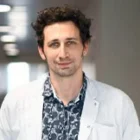
Alex Fourdrain
Hospital Practitioner-Researcher

Alice Mogenet
Doctoral student

Alix Frejafon
Engineer

Arnaud Guille
Engineer
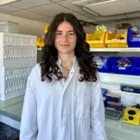
Camille Athenour
Master 1 student

Claire Germier
Technician

David Birnbaum
Hospital Researcher-Practitioner
Emilie Denicolai
Research engineer
Fabiana Arco
Post-doctoral researcher
Gwénaël Lumet
Engineer

José Adélaïde
Technician
Laura Moutard
Post-doctoral researcher
Lisa Malard
PhD Student
Luc Xerri
Hospital Practitioner-Researcher

Lucas Usclade
Engineer

Maëlle Picard
Doctoral student

Marc Lopez
Engineer

Marine Makoa
Engineer
Max Chaffanet
Engineer
Nadiya Belfil
PhD Student

Olivier Cabaud
Research engineer

Pascal Finetti
Engineer

Pascale Tomasini
Hospital Researcher-Practitioner

Quentin Da Costa
Engineer

Rani Tazerart
Technician

Renaud Sabatier
Hospital Researcher-Practitioner
Syrine Bennaï
Master 2 student
Wissal Ben Taher
Master 2 student
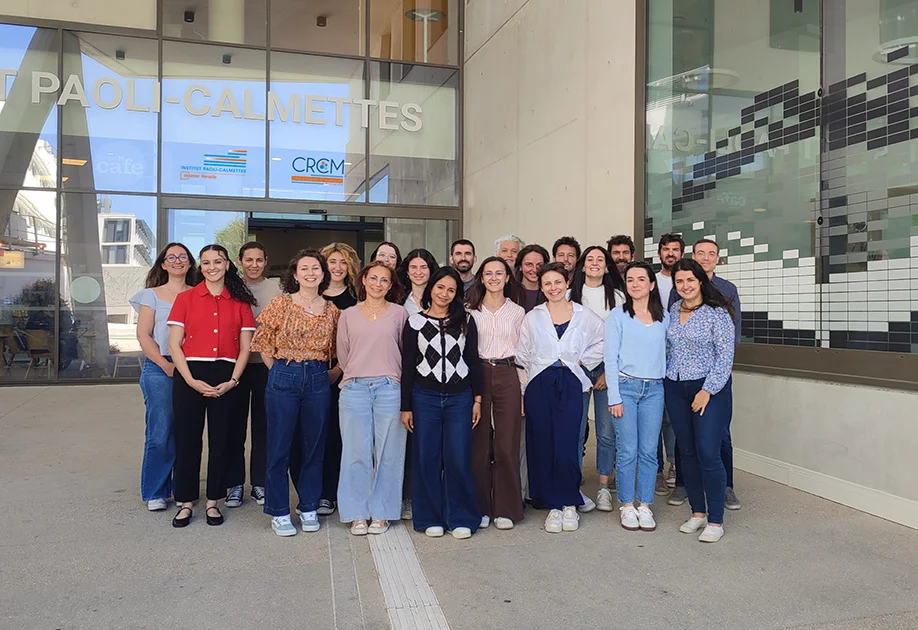
Our team brings together multidisciplinary profiles working together to develop tools that will ensure better management of aggressive solid tumors.
Our scientific priority is to combat aggressive or treatment-resistant metastatic breast and colon cancers. To this end, we are developing so-called "precision medicine" strategies (Figure 1).

Figure 1. General workflow. Figure generated with Canva.
To guide our projects, the team is headed by François Bertucci and Emilie Mamessier, two recognized experts in their respective fields.
- François Bertucci is a medical oncologist and pioneer in tumor profiling. He is also head of the Translational Research Committee at the Institut Paoli Calmettes.
- Emilie Mamessier is a researcher at INSERM, specializing in transfer research.
This co-direction enables us to combine innovative technical and scientific developments on relevant clinical issues, all thanks to valuable patient samples.
A multidisciplinary team
Our projects benefit from the involvement of a team of around twenty members, experts in a wide range of disciplines: bioinformatics, immunology, molecular and cellular biology, etc.
State-of-the-art equipment
In addition to the equipment available at CRCM, our laboratory has its own resources for carrying out our research (see figure 2):
- Devices and robots for next-generation sequencing (NextSeq500, Robot Magnis)
- Transcriptomics (Affymetrix) and On-chip comparative genomic hybridization (Agilent) platforms
- Equipment for isolating DNA (BioRad droplet generator and reader) and circulating tumor cells (Parsortix, micromanipulator)
- Microfluidic devices (Ibidi, Fluigent, peristaltic pump)
- Real-time imaging system and microscopy
- Cell culture rooms dedicated to human samples
Our mission
Together, we are working to :
- Refine tumor classification,
- Offer more therapeutic options,
- Optimize treatment strategy,
- A better understanding of resistance mechanisms,
- A better understanding of metastatic processes.
This relies on the design of prospective clinical trials to collect samples at different stages of the disease and associated clinical data. This approach is essential, particularly for newer treatments for which only limited data are available.

Figure 2. All the techniques/technologies used in the team are designed to adapt to patient samples and meet clinical needs: tumor profiling and classification, single-cell resolution computational approaches, multiplexed immunofluorescence on FFPE tissue, patient tumor-derived organoids (single or complex co-culture), analysis of liquid biopsies, identification of new targets and design of new treatments. Figure generated with BioRender.
Key words
- Treatment resistance
- Aggressive cancers
- Drug-conjugated antibodies
- Circulating tumor cells
- Tumor microenvironment
To tackle the issue of treatment resistance, we have structured our research program around 5 axes.
The projects


Team news
featured publications
05/2024
Bertucci F, de Nonneville A, Finetti P, Cohendet A, Guille A, Mamessier E
07/2016
Bertucci F, Viens P, Birnbaum D.
04/2017
M-Rabet M, Cabaud O, Josselin E, Finetti P, Castellano R, Farina A, Agavnian-Couquiaud E, Saviane G, Collette Y, Viens P, Gonçalves A, Ginestier C, Charafe-Jauffret E, Birnbaum D, Olive D, Bertucci F, Lopez M.
11/2017
Birnbaum DJ, Finetti P, Birnbaum D, Mamessier E, Bertucci F.
08/2023
Bertucci F, De Nonneville A, Finetti P, Mamessier E.
08/2022
Aulas A, Liberatoscioli ML, Finetti P, Cabaud O, Birnbaum DJ, Usclade L, Birnbaum D, Bertucci F, Mamessier E.


Labels, Funding and Partners


Like others, they were part of the team. Thank you to all those who have contributed to CRCM's excellence and impact.


