



Afaf Hamame
Post-Doctoral Fellow
Christopher Rovera
Researcher
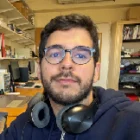
Claudio Montenegro
Post-doctoral researcher
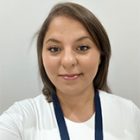
Djamila Belghoula
PhD Student

Eduarda Acioli
PhD Student
Erinn Soucie
Researcher

Fabienne Guillaumond-Marchai
Researcher
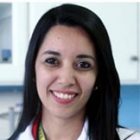
Fanny Hidalgo Villeda
Post-doctoral researcher
Fanny Matrand
PhD Student
Georgios Efthymiou
Post-doctoral Researcher

Jean-Emmanuel Mitry
Hospital Researcher-Practitioner

Julia Braga Pereira
Doctoral student

Manon Grelet
Engineer
Mélissa Giroudoux
Engineer
Paraskevi Kousteridou
Engineer

Pierre Bertrand
Engineer
Raja Zine-El-Abidine
PhD Student

Victor Pierini
Technician
The DISARM PDAC team investigates how the tumor microenvironment (TME) and metabolic reprogramming drive the aggressiveness and treatment resistance of pancreatic cancer.
Why Pancreatic Ductal Adenocarcinoma (PDAC)?
- PDAC is the 4th leading cause of cancer-related death worldwide.
- It has a 5-year survival rate of just 12%.
- At diagnosis, 80% of patients present with advanced, metastatic, non-resectable disease and show poor response to existing therapies.
- While chemotherapies like FOLFIRINOX offer modest survival benefits, immunotherapies—revolutionary in many cancers—have shown limited impact in PDAC.
Key Challenges of the Team
- Understanding cell communication at the primary tumor, tumoral/metastatic sites and at the organism levels with inter-organ/tissue crosstalk. We aim to determine and predict the role of tumor-stromal cell communication in PDAC carcinogenesis. Our team focuses on cross-talk between tumor cells and cancer-associated fibroblasts (CAFs), immune cells, nerve cells as well as resident cells in the liver metastatic niches.
- Poor tumor perfusion. Low blood supply results in oxygen and nutrient scarcity, forcing tumor and stromal cells to reprogram their metabolism to face these stress conditions. This metabolic rewiring drives the emergence of aggressiveness and therapy resistance. Our team aims to decipher the metabolic adaptations of primary and metastatic tumor cells and elucidate the metabolic cross-talk between tumor and stromal cells in both sites.
- Response to treatments. To better understand the role of cell communication and metabolic reprogramming in regards to clinical protocols available to PDAC patients, we explore how cell communication and metabolic changes i/impact on chemo-resistance/sensitivity and ii/could predict the tumor cells’ response to the main chemotherapeutic agents and immunotherapies.
With our multidisciplinary and integrative expertise, combining cell biology, metabolism, immunology, oncology, and bio-informatics, we develop novel strategies for tackling one of the most challenging cancers. We address these challenges through four interconnected research areas:
1. Stromal Cell Communication and Tumor Aggressiveness (Figure 1)
Lead: R. Tomasini
- Role of extracellular vesicles in therapeutic resistance
- Impact on vascular and nerve reprogramming
2. Epigenetics and Onco-Immunology (Figure 1)
Lead: E. Soucie
- How epigenetic mechanisms regulate the immune response in PDAC

Figure 1. Identification and validation of TME-derived EVs components as potential therapeutic targets and biomarkers bridging therapeutic response and immune-suppression.
3. Metabolic Adaptation in primary tumor and liver metastasis (Figure 2)
Lead: S. Vasseur & F. Guillaumond
- Tumor/stromal cell metabolic cross-talk in primary tumor and metastatic site.
- How lipid remodeling of PDAC cells impacts tumor-microenvironment
- Taking advantage of clock-induced metabolic reprogramming to perform chrono-modulated targeting of the metabolic vulnerabilities in PDAC
4. Stroma and Metabolic Plasticity/Flexibility (Figure 2)
Lead: S. Vasseur
- Influence of the extracellular matrix (ECM) on tumor metabolism
- Interplay between stromal signals, metabolism, and chemoresistance

Figure 2: Metabolic rewiring of PDAC cells at the primary and secondary sites: finding metabolic therapeutic targets to impede/predict PDAC evolution towards a metastatic disease
Our integrated approach aims to uncover new therapeutic strategies by targeting the unique biological features that make PDAC so challenging to treat.

Team news

Featured publications
01/2024
Hussain Z, Bertran T, Finetti P, Lohmann E, Mamessier E, Bidaut G, Bertucci F, Rego M, Tomasini R.
04/2023
Rapetti-Mauss R, Nigri J, Berenguier C, Finetti P, Tubiana SS, Labrum B, Allegrini B, Pellissier B, Efthymiou G, Hussain Z, Bousquet C, Dusetti N, Bertucci F, Guizouarn H, Melnyk P, Borgese F, Tomasini R, Soriani O.
05/2022
Gouirand V, Gicquel T, Lien EC, Jaune-Pons E, Da Costa Q, Finetti P, Metay E, Duluc C, Mayers JR, Audebert S, Camoin L, Borge L, Rubis M, Leca J, Nigri J, Bertucci F, Dusetti N, Iovanna JL, Tomasini R, Bidaut G, Guillaumond F, Vander Heiden MG, Vasseur S.
08/2021
Acier A, Godard M, Gassiot F, Finetti P, Rubis M, Nowak J, Bertucci F, Iovanna JL, Tomasini R, Lécorché P, Jacquot G, Khrestchatisky M, Temsamani J, Malicet C, Vasseur S, Guillaumond F.
07/2017
Olivares O, Mayers JR, Gouirand V, Torrence ME, Gicquel T, Borge L, Lac S, Roques J, Lavaut MN, Berthezène P, Rubis M, Secq V, Garcia S, Moutardier V, Lombardo D, Iovanna JL, Tomasini R, Guillaumond F, Vander Heiden MG, Vasseur S.
11/2016
Leca J, Martinez S, Lac S, Nigri J, Secq V, Rubis M, Bressy C, Sergé A, Lavaut MN, Dusetti N, Loncle C, Roques J, Pietrasz D, Bousquet C, Garcia S, Granjeaud S, Ouaissi M, Bachet JB, Brun C, Iovanna JL, Zimmermann P, Vasseur S, Tomasini R.


Labels, Funding and Partners


Like others, they were part of the team. Thank you to all those who have contributed to CRCM's excellence and impact.