

Open Group Leader Position in Pancreatic Cancer Research
6 May 2026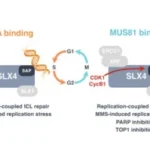
CDK1 phosphorylation switches SLX4 SAP from DNA binding to MUS81 binding
2 June 2026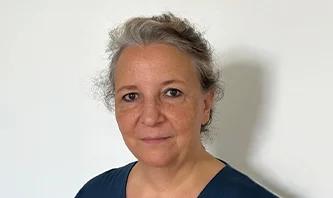
At the CRCM, the PEP unit works on a daily basis to promote equality and ensure a respectful and inclusive working environment, from raising awareness among staff to providing confidential one-to-one support.
As an INSERM research fellow, Agnès Tissier travelled through Strasbourg, Marseille and Lyon with the same observation in mind: women are still too often absent from positions of responsibility. It was this conviction that led her to join the unit. In this candid interview, she talks about unconscious bias, self-censorship, stunted careers — and, above all, what can be done in practical terms to change things.
What motivated you to join this ‘Parity Professional Equality’ working group?
Agnès Tissier: “Since becoming a tenured INSERM research fellow, I have worked in Strasbourg, Marseille and Lyon, where I have consistently observed the same thing: women are under-represented in leadership roles, whether heading up teams or units. At the CRCM, I joined the ‘Parity Professional Equality’ unit to take collective action: identifying barriers and proposing solutions to create a more inclusive scientific environment.”
Why is this type of initiative important to the CRCM?
AT: “As a research institute, the CRCM has a role to play as a model. A dedicated unit helps to raise awareness, identify obstacles and propose solutions tailored to our centre.”
In your view, what are the main challenges relating to gender equality in the scientific community?
AT: “In my view, the challenges surrounding gender equality in research are serious and urgent. Even today, women remain under-represented in senior positions, strategic committees and decision-making bodies. This under-representation deprives the sector of talent, fresh perspectives and a richer collective dynamic.
Certain ‘unconscious’ biases also play a key, often insidious, role. They creep into recruitment and assessment processes, or even into the day-to-day allocation of tasks. Do we still see women being entrusted with organising team-building activities or administrative tasks, whilst their male colleagues are ‘naturally’ steered towards scientific or managerial roles? Because these mechanisms are subtle, they are all the more difficult to eradicate – and yet their impact on careers is very real.
Finally, the issue of respect and inclusion: harassment, microaggressions or simply disparaging remarks. Such behaviour, which is all too often downplayed, creates toxic environments that hinder professional development and may even drive some people to leave the sector. A calm and supportive working environment is not a luxury, but an essential prerequisite for everyone to be able to give their all.
For me, these issues are a matter of collective performance. A more inclusive scientific community is a more innovative and creative one, better equipped to tackle the challenges of research.”
Which issues do you consider to be priorities at present?
AT: “I think it’s important to keep working on raising the profile of female role models in science, and to tackle the self-censorship among young researchers—or even older ones—who don’t apply for jobs because they lack confidence.”
Do you personally observe any barriers or biases in scientific careers?
AT: “Although I have not personally experienced blatant discrimination in my own career, I am well aware that biases exist, as demonstrated by numerous studies on careers in science.
Furthermore, some of my female colleagues have told me that they were asked about their family life during interviews, which struck me as odd, as I don’t get the impression that men are asked this sort of question. I also witnessed a situation that I perceived as unfair, where a colleague ultimately did not get the team leadership role that seemed to be intended for her. These factors, even though they do not concern me directly, contribute to my feeling that there are still barriers in scientific careers.”
What do you hope to contribute personally to this group?
AT: “Above all, I want to play an active role in the development of this group. I am keen to make a tangible contribution, whether by taking part in the activities organised, putting forward ideas or supporting existing initiatives. I have been very impressed by the energy generated by this highly committed PEP group, which strengthens my motivation to get involved in a constructive and long-term way.”
What kinds of initiatives or projects are close to your heart?
AT: “I am particularly interested in setting up training initiatives for early-career researchers and students. I am also keen to see initiatives carried out in collaboration with management, particularly with a view to incorporating equality criteria into evaluation processes.”
If you had a message for the younger members of staff at the CRCM, what would it be?
AT: “Don’t be afraid to speak up: your voice matters, and your ideas deserve to be heard. Look for allies, and don’t hesitate to contact the support team if you encounter any obstacles. Our centre needs your diversity!”
Is there a common misconception about gender equality in research that you’d like to challenge?
AT: “Gender parity is a matter of fairness and collective effectiveness. Quotas are a temporary measure designed to redress historical imbalances.”
To find out more about the PEP unit, click here.