

Understanding EZH2 activities in leukemia, a potential therapeutic strategy
10 April 2026
Position available at CRCM: Group Leader in Onco-Hematology / Immuno-Oncology
29 April 2026
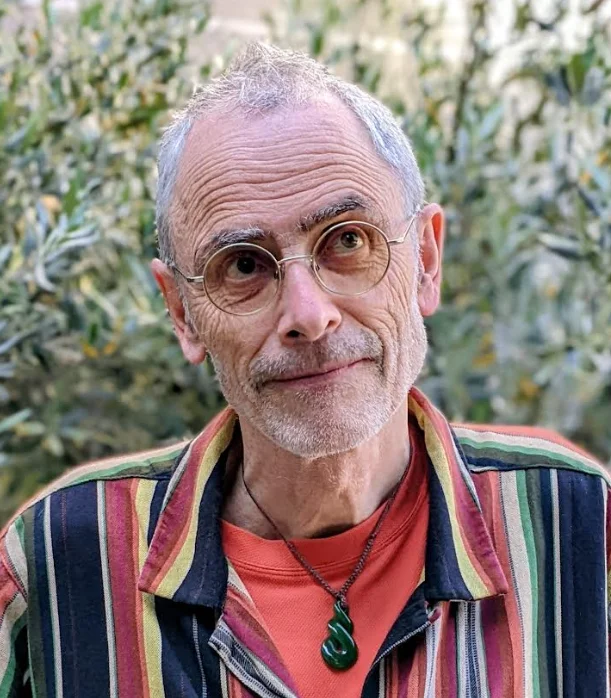
Christophe DE LA ROCHE SAINT ANDRÉ
A passionate researcher, dedicated educator, and well-known figure at the CRCM, Christophe discusses in this interview his latest solo-authored article, which explores the compensatory effect of aneuploidy on certain mutations.
Spanning basic science, knowledge sharing, and personal fun facts, he humorously offers a behind-the-scenes look at his unique journey.
Discover the publication: “Aneuploidy alleviates the cell proliferation defect caused by mutations affecting origin licensing in Saccharomyces cerevisiae”
If I say “aneuploidy for dummies”, can you give us a pitch for your article in 30 seconds flat?
Christophe: Aneuploidy, meaning an abnormal number of chromosomes, is rare in normal cells but common in cancer cells. It generally disrupts cellular function, which explains why it is subject to negative selection under normal conditions. However, in stressful situations, such as those encountered by tumor cells, some of its effects can become advantageous.
In the yeast Saccharomyces cerevisiae, I observed that an extra chromosome can enhance the proliferation of mutant cells whose DNA replication is less efficient due to a limited number of active origins of replication. This effect is not dependent on the specific chromosome, suggesting that it is not based on specific genes, but on a more global mechanism. The presence of an extra chromosome lengthens the G1 phase of the cell cycle, that is, the time preceding DNA replication. I showed, through various genetic manipulations, that this additional delay allows for the activation of more origins of replication, thus facilitating DNA duplication in mutant cells. These results suggest that, in cancer cells, aneuploidy could help to better manage the stress associated with DNA replication following the activation of certain oncogenes, by giving cells more time to prepare for this key step in cell proliferation.
You are the sole author of your paper, which is quite rare. Was this a challenge you set for yourself, or was it circumstantial?
Christophe: It’s just that I’m a bit of a loner! (laughs) More seriously, it stems from a combination of personal desire and particular circumstances. It’s true that it might seem a little unusual in an era where research is increasingly collaborative.
I would like to take this opportunity to highlight two points. First, this work arose from a chance observation, demonstrating that serendipity can still be a valid starting point. Second, it shows that in the age of big data, it is still possible to conduct, and publish, a purely genetic investigation, “the old-fashioned way.”
Retirement is just around the corner, was this solo article your scientific “mic drop” before moving on to something else?
Christophe: Thank you for reminding me of this deadline! Actually, it’s difficult to stop research overnight, like any demanding activity one has chosen, I imagine. While I still have a few months ahead of me, I’m taking advantage of the time to try and bring one last story to a close. After that, I’ll have to turn the page, while still keeping up with scientific news.
Otherwise, looking back, what was your favorite moment in your career? Or is there a particular anecdote or situation you’d like to share with us?
Christophe: There isn’t one particular moment that spontaneously comes to mind. However, I can say one thing that has never changed: the desire to experiment. It’s actually a prerequisite for publishing a solo article, because you have to rely on yourself to carry out the experiments. Anyway, a little anecdote about jet lag, which can make listening to lectures a bit tricky after a long trip. It was around the year 2000, at a symposium in Cold Spring Harbor. Having arrived that very day, I was thrilled at the prospect of listening to Elizabeth Blackburn (future Nobel laureate in Physiology or Medicine). But comfortably settled in my chair, I quickly felt sleep creeping up on me (for me, it was 3:00 a.m.). I held on somehow… until her presentation, the precise moment I finally drifted off. From that day on, I made it a habit to arrive a day early at conferences across the Atlantic.
I know you do a lot of things outside the lab, can you tell us a little about your science outreach activities outside the CRCM?
Christophe: I have a strong passion for sharing knowledge, whether through teaching, primarily at the Master’s level, or through public lectures. I am involved with AFIS (French Association for Scientific Information https://www.afis.org/), where I contribute to the dissemination of rigorous scientific information. It was in this context that I wrote a book on epigenetics and heredity, a field where appealing hypotheses have sometimes been too hastily elevated to the status of certainties (https://www.book-e-book.com/livres/180-quand-lepigenetique-sen-mele-nl002-9782372460552.html).
For several years, I’ve been running a summer workshop on “Around DNA” in Aveyron. On the same theme, I also organize occasional meetings in my neighborhood (La Panouse). And recently, I’ve started exploring a new way of sharing knowledge: the lecture-performance, just to change things up a bit.
Finally, I’m being asked over the phone to ask you a question about your “completely crazy” badges. Can you tell us more about them?
Christophe: “Completely crazy” is probably an exaggeration… let’s say “slightly eccentric.” Actually, it reminds me that I’ve stopped wearing them, and I should start again. I’ve discovered that badges can be a pretty effective communication tool. Outside of work, some of them have led to some unexpected conversations with complete strangers.